Best Books for NEET Preparation (2026 Updated Guide)
Stop for a second.
How many books are lying on your desk right now for NEET prep?
5? 10? Maybe even more?
Now ask yourself this honestly:
Are you actually doing better because of all these books?
I’m asking because I’ve seen this exact pattern again and again.
A student buys one Physics book. Things improve.
So they think, “Maybe one more will help.”
Then comes a Chemistry book.
Then Biology.
Then a practice book.
Then an MCQ book.
Six months later?
They’re confused.
Jumping between books.
Not finishing any single one properly.
Constantly feeling like they’re not doing “enough.”
If this sounds familiar, you’re not alone.
If you’ve already bought multiple books and still feel unsure about which ones to actually study, this guide is for you.
If everyone around you is recommending different books (and you don’t know who to trust), this is for you.
If you’re wondering whether NCERT is really enough or if you must use extra reference books, we’ll clear that up here and help you choose the best books for NEET without confusion.
Here’s what I want you to know right now:
You don’t need 10 books to crack NEET. Most students waste time collecting NEET preparation books instead of using a few books properly.

Seriously.
I’ve tracked hundreds of successful NEET students over the years. The common factor was never the number of books they owned.
It was how well they used a small set of the right books.
Choosing the right study material is the first step toward a career in medicine.
If your goal is to secure a seat in one of the premier AIIMS colleges in India, you cannot afford to waste time on sub-par resources, you need books that align perfectly with the high difficulty level of these top-tier institutions.
Because right books + right consistency = results.
That’s it.
So in this guide, we’ll focus on which books actually matter and which ones you can safely ignore.
Before choosing books, understand this one rule

There’s something most coaching classes don’t say clearly enough.
NEET is NCERT-based, not book-count-based.
This matters more than you think.
NEET rewards you for deeply understanding NCERT content. It does not reward you for reading every reference book available in the market.
Yet this is what happens to many students.
They panic. They start thinking, “NCERT alone won’t be enough. I should add more books just to be safe.”
Slowly, they drown in information.
I see this pattern again and again, and honestly, it hurts to watch.
These are capable, hardworking students.
They don’t lack intelligence or effort.
They just fall into the trap of believing that more books automatically mean better preparation.
The truth is simple.
More books usually hurt your preparation.
When you keep switching between multiple books for the same topic, three problems show up.
Time gets wasted
Reading the same Physics chapter from two or three books feels productive, but it delays actual progress.
Confusion increases
Different books explain the same concept in different ways. Your brain starts mixing explanations and struggles to decide what is correct.
Revision disappears
So much time goes into reading new material that there’s no time left to revise what you’ve already studied.
I’ve seen NEET toppers use just 3 to 4 books in total. And I’ve seen average students struggle with 12 to 15 books.
The result is almost always the same. Surprisingly, students with fewer, well-chosen books perform better.
That is why this guide focuses on minimum effective books.
Not the maximum number.
Not the most popular names.
Not so-called topper recommendations.
Only the books that genuinely help you improve your score.
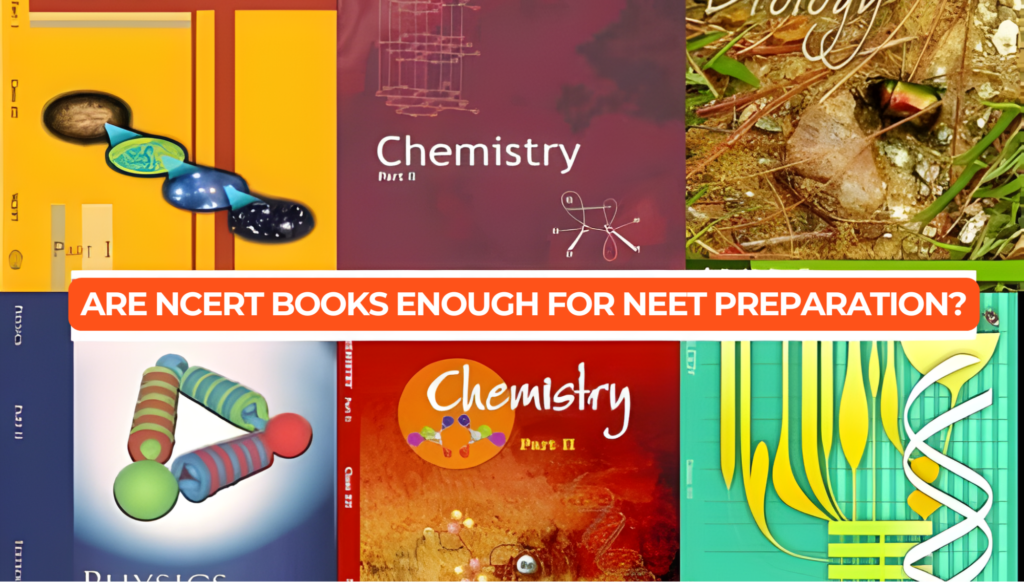
Are NCERT Books Enough for NEET Preparation?
Let me be very clear about one thing.
There’s no sugar-coating this.
NCERT is non-negotiable for NEET and forms the foundation of almost all effective NEET preparation books.
If you’re not reading NCERT line by line, you’re not fully preparing for NEET. You’re preparing for something else.
NEET consistently rewards students who understand NCERT deeply, not those who collect the most reference books.
That said, there’s an important nuance many guides miss.
NCERT is enough for some subjects, but not enough for all.
Let’s break this down subject by subject.
NCERT for Biology
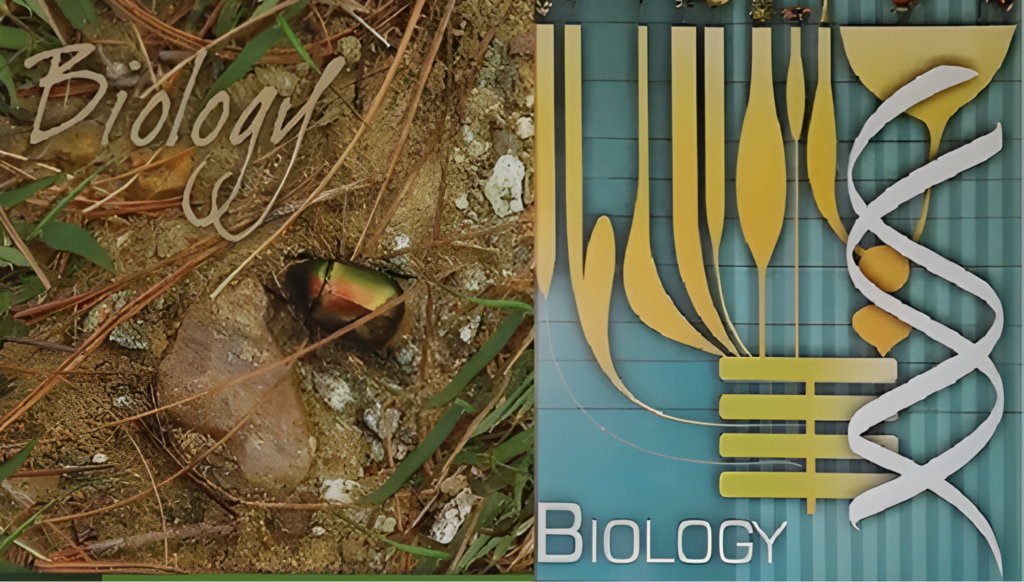
For Biology, NCERT alone contributes to around 90% of your NEET score.
This is not an exaggeration.
NEET question setters closely follow NCERT. In many cases, questions are directly inspired by lines, examples, or diagrams from the textbook.
If your Biology preparation does not revolve around NCERT, something needs to change.
Do you need a reference book for Biology?
Honestly, no.
NCERT is more than sufficient for scoring well and remains the most important book among all best books for NEET Biology.
That said, a small number of students use reference books like Campbell or Trueman’s to gain clarity on specific difficult topics such as ecology or plant physiology.
The right approach is simple:
- Read NCERT multiple times
- Make sure every line makes sense
- Use a reference book only if a topic still feels unclear after repeated NCERT revisions
And even then, stick to just one reference book. Not multiple.
NCERT for Chemistry
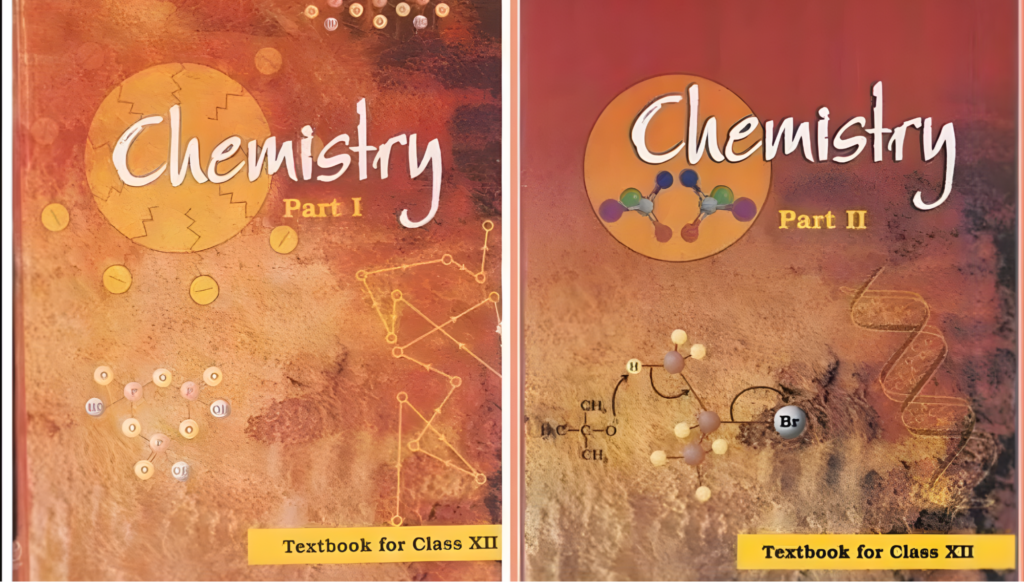
Chemistry works a little differently.
It has three parts:
- Inorganic
- Organic
- Physical
NCERT is excellent for Inorganic Chemistry. Almost every question in this section can be traced back to NCERT lines and tables.
Organic and Physical Chemistry are where students struggle.
NCERT introduces concepts, but it does not go deep enough into reaction mechanisms or numerical problem-solving.
For Chemistry, reference books are useful and often necessary.
The rule is very clear:
- One reference book for Organic Chemistry
- One reference book for Physical Chemistry
That’s all.
Avoid stacking multiple books for the same section. Master one good book along with NCERT, and that combination is more than enough.
NCERT for Physics
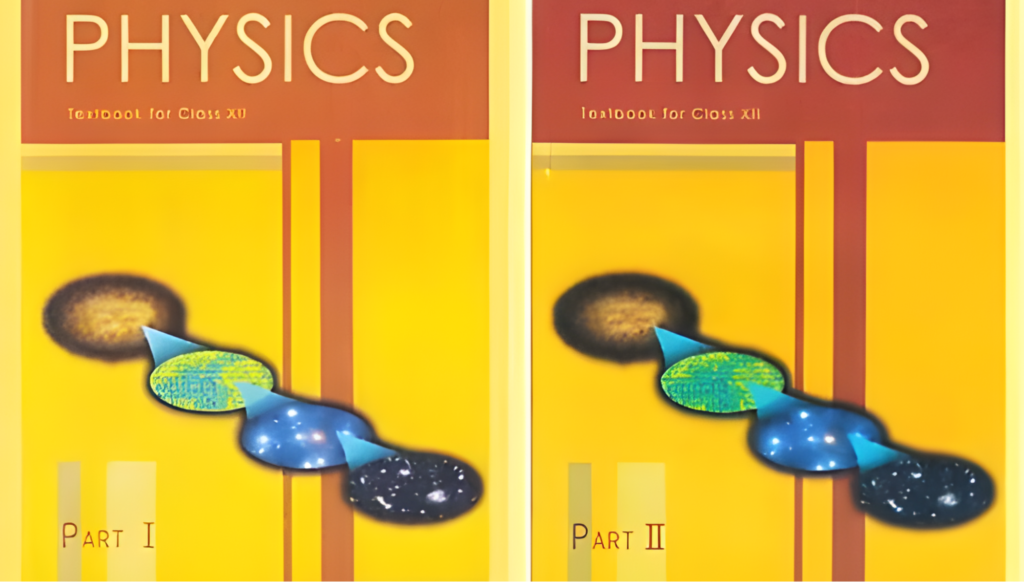
Physics is the subject that creates the most anxiety for NEET students.
And that’s understandable.
NCERT explains concepts well, but it does not provide enough problem-solving exposure for NEET-level questions.
You’ll read about projectile motion in NCERT. It’ll make sense. Then you’ll see NEET questions and think, “That’s not in NCERT!”
It actually is. But NCERT doesn’t show you 50 variations of the same problem.
So yes, you need a good Physics book beyond NCERT.
But here’s where I see students go wrong: Many students make the mistake of buying problem-heavy books and trying to solve everything.
That’s not the goal.
A book like HC Verma is valuable not because of the number of problems, but because it helps you understand concepts better.
Use Physics books strategically:
- Focus on problems that teach new ideas
- Skip repetitive questions once a concept is clear
- Learn how to think, not just how to calculate
Quality practice matters more than quantity.
Best books for NEET preparation (subject-wise)
Now let’s talk about actual book recommendations.
Before that, remember one thing clearly:
This list focuses on minimum effective books, not maximum options. The right books, combined with an effective NEET preparation schedule, can make your preparation far more effective than collecting multiple resources.
More choices do not mean better preparation.
Best books for NEET Biology

NCERT (Class 11 and 12)
This is your foundation. Nothing comes close.
Read it multiple times.
- First reading: Focus on understanding
- Second reading: Exam-focused reading and memorization
- Later readings: Line-by-line revision
NEET Biology questions are heavily based on NCERT. Many questions are lifted directly from lines, examples, or diagrams.
Optional reference book
- Trueman’s Biology or
- Campbell’s Biology
Use a reference book only when:
- A topic still feels unclear after multiple NCERT readings
- You need conceptual clarity for specific chapters
Do not read reference books cover to cover.
Do not use more than one.
That is enough for Biology.
Adding multiple Biology books usually increases confusion, not scores.
Your goal should be simple:
Know NCERT Biology so well that even a partially read question feels familiar.
Best Books for NEET Chemistry
Chemistry requires a slightly different approach.
It has three parts:
- Inorganic
- Organic
- Physical
NCERT (Class 11 and 12)
This is the base for all three sections.
Inorganic Chemistry
NCERT is strong and often sufficient.
- Read NCERT thoroughly
- Revise tables, trends, and exceptions
- Add a reference book only if concepts still feel unclear
Many students make the mistake of collecting multiple Inorganic books and trying to memorize everything. That approach rarely works.
NEET tests understanding of patterns, not endless reactions.
Organic Chemistry
NCERT gives the structure, but it is not enough on its own.
Use:
- NCERT
- One reference book for mechanism clarity
Options:
- Solomons and Fryhle
- Morrison and Boyd (dense, but useful if you’re comfortable)
Focus on understanding reaction mechanisms.
Avoid rote memorization.
Physical Chemistry
NCERT provides the basics, but practice is essential.
Use:
- NCERT
- One numerical-focused book
Options:
- P. Bahadur
- RC Mukerjee
Focus on problem-solving and concept application, not just reading theory.
Best Books for NEET Physics
NCERT (Class 11 and 12)
This builds the conceptual foundation and should not be skipped.
One concept + problem-solving book
Choose one, not multiple.
Optional reference book
- HC Verma
- Resnick, Halliday, & Walker
- BM Sharma (simpler explanations if HC Verma feels difficult)
HC Verma works well because the explanations are clear and balanced, and the problems are designed to teach concepts rather than overwhelm.
If it feels challenging, BM Sharma can be a better starting point.
A common question students ask is whether every problem needs to be solved.
The answer is no.
Solve problems that introduce new ideas or strengthen weak areas.
Skip repetitive questions once the concept is clear.
Quality practice always matters more than quantity.
Best MCQ and practice books for NEET

This is where many students make a common mistake.
They start buying MCQ books too early.
MCQ books are practice tools, not learning tools.
They are meant to be used after you understand a concept, not before.
This order of learning is important even for an average student trying to crack NEET.
For class 11 students: Don’t touch MCQ books yet.
- Focus on understanding concepts
- Build the foundation properly
For class 12 students (after 3-4 months of concept learning):
- One MCQ book per subject
- Don’t buy 5 different MCQ books
Which MCQ books are good?
Biology: NCERT Exemplar + One reference MCQ book (optional)
Chemistry: NCERT Exemplar + Problem Solver books
Physics: NCERT Exemplar + Problems from HC Verma itself
Here’s my honest take on MCQ books:
They’re overrated.
Most students think buying an MCQ book means they’re “preparing for the exam format.”
But then they solve MCQs without understanding concepts.
That’s backward.
Learn concepts → Solve problems from a textbook → Then solve MCQs.
Not the other way around.
Best books for NEET preparation for class 11 students
Class 11 is when most students panic unnecessarily.
They see Class 12 students with reference books and think, “I need those too!”
Wrong timing.
Class 11 is about building the foundation. Not showing off with advanced books.
What class 11 students should focus on
NCERT + good problem books (HC Verma for Physics, concept-focused books for Chemistry).
That’s it.
Don’t buy reference books yet.
Don’t buy competitive exam books.
Just build the foundation properly.
I’ve seen Class 11 students who moved too fast, used advanced books, and then struggled in Class 12 because their basics were weak.
Slow is smooth. Smooth is fast.
Recommended books for class 11
- NCERT (all subjects) – Read twice
- HC Verma (Physics) – For problem-solving
- One Chemistry problem book (optional)
- Biology: NCERT only
What class 11 students should avoid
- Reference books
- “Advanced” books
- Too many MCQ books
Best books for NEET preparation for class 12 students

Class 12 feels different.
Your priorities shift.
Board exams come into the picture.
NEET preparation continues alongside.
It can feel messy and overwhelming, and that’s completely normal.
How book strategy changes in class 12
- Time becomes limited: You no longer have the luxury to experiment with many books.
- Board exams matter: Your book choices should support both boards and NEET.
- Concepts start settling: This is when focused practice becomes more important than new theory.
Recommended books for class 12
Stick with what you chose in Class 11.
Don’t switch books now.
If you were using HC Verma, continue. Don’t jump to a different Physics book.
If you were using NCERT + one Chemistry reference, continue.
What to add
- MCQ practice books (after 4-5 months of Class 12)
- Revision books (optional)
- Previous year papers
What not to add
- New reference books (you don’t have time)
- Multiple books for the same subject
- “Topper books” (they’re often not better, just more popular)
Here’s something I’ve noticed: Class 12 students who keep their books simple and just solve more problems do better than those who keep hunting for the “perfect book.”
The perfect book doesn’t exist.
Your book + your effort + your consistency = your result.
Best books for NEET droppers

Okay, so you’re repeating.
That takes courage. I respect that.
Now, the question: Do you need all new books?
Short answer: No.
What droppers should do:
Reuse:
- NCERT (it doesn’t change)
- Any reference book that worked for you last time
- Good problem books
Remove:
- Books you didn’t finish last time (they clearly weren’t for you)
- Books that confused you
- Books you used just for revision (get a cleaner revision book this year)
What to change:
The big one: Your approach.
Don’t just buy new books hoping that fixes the problem.
If you scored 500 marks last time, and the issue was conceptual understanding, new books won’t fix that.
What fixes it: Better problem-solving, more time on weak topics, smarter revision.
Books are the same. Your strategy needs to change.
New books you can consider:
- Test series (different source from last year)
- More targeted MCQ books for weak subjects
- Faster revision books (to save time)
But core books? The same ones work fine.
Best books for NEET preparation in Hindi medium

This is an important topic, especially for students who worry about language.
I’ve worked closely with Hindi-medium students, and one thing is very clear.
Language should not become an excuse.
At the same time, it can be a real challenge if not handled smartly.
NCERT Hindi edition

NCERT Hindi editions are reliable and well written.
- Use the Hindi NCERT for all subjects
- Read it carefully, just like English-medium students do
- Pay attention to diagrams, tables, and definitions
The quality of NCERT Hindi books is good and fully suitable for NEET preparation.
Reference books in Hindi
Some reference books are available in Hindi editions.
Before buying, keep these points in mind:
- Translation quality varies a lot
- Some books are well translated, others create more confusion
- Always check reviews or sample pages before committing
Hindi reference books can work, but they require extra caution.
My honest take on language choice

If you are comfortable reading English, switching to English books often gives better clarity, especially for Physics and Chemistry.
If English feels difficult or slows you down, Hindi NCERT is completely fine.
The biggest concern students have is usually this:
“Will preparing in Hindi medium affect my NEET score?”
The answer is no.
NEET rewards concept understanding, not language preference.
I’ve seen Hindi-medium students score 650+
I’ve also seen English-medium students struggle around 400
The difference was never the language.
It was effort, consistency, and smart study choices.
Recommended books for Hindi-medium students
- NCERT Hindi Edition for all subjects
- HC Verma (Hindi edition available)
- Chemistry reference books in Hindi (only after checking quality)
- English-medium books, if you are comfortable, especially for Physics
How many books are actually enough for NEET?

Let me give you the numbers.
Ideal book count per subject:
- Biology: 2 books (NCERT + optional reference)
- Chemistry: 3 books max (NCERT + Organic + Physical reference)
- Physics: 2 books (NCERT + problem book)
- MCQ/practice books: 2-3 per subject
Total: 9-11 books for comprehensive prep.
That’s it.
Not 20. Not 15. Somewhere around 10 well-chosen NEET preparation books are enough.
Also let me tell you what happens if you keep changing books:
Month 1: Buy a new Physics book (HC Verma)
Month 2: Friend says HC Verma is too hard, switch to BM Sharma
Month 3: See a YouTube video praising Resnick Halliday, and buy it
Month 5: Still haven’t finished any of them completely
Result?
Jack of all trades, master of none.
The stick vs. switch rule
Stick with one book for at least 2-3 months.
Judge it after 2-3 months.
If it’s working, keep going.
If it’s not, switch (don’t add, switch).
Most students don’t give books enough time. They switch too fast.
A book needs time to show results. Not days. Weeks and months.
So here’s my advice: Be patient with your books.
Common book mistakes NEET aspirants make

I want to talk about the mistakes I see students make. These are real mistakes that hurt their scores.
Buying too many reference books
Student buys: NCERT, HC Verma, BM Sharma, Irodov, Mechanics books…
Result: Confusion overload.
You know what happens?
Your brain can’t decide which book’s explanation is “correct.”
You’ll read the same concept in three books, and each one explains it slightly differently.
Your confidence crumbles.
Reference books should supplement NCERT, not replace it.
One, maybe two per subject. That’s enough.
Ignoring NCERT lines word-by-word
I see students use reference books heavily but skip NCERT.
Big problem.
NEET literally copies from NCERT. Not “inspired by.” Literally copies.
Phrases. Examples. Diagrams. Everything.
So if you miss NCERT, you’re missing the actual question bank.
Read NCERT like it’s your Bible. Because for NEET, it basically is.
Solving MCQs without concepts
Students buy MCQ books on Day 1.
Start solving MCQs on Day 1.
Get 40% right. Feel sad.
Here’s why this doesn’t work: You’re testing yourself before learning.
Concept first. Problems second. MCQs third.
Not the other way around.
Switching books mid-preparation
This is probably the biggest time-waster I see.
Students use HC Verma for 2 months. It feels hard. Switches to BM Sharma.
Uses BM Sharma for 1 month. Feels easy. Switch back to HC Verma.
Now they’ve spent 3 months and not finished any book completely.
Books need a runway. Give them time.
Buying “Topper Books”
“This book is what Rank 1 used!”
Okay… so what?
Just because someone scored high with that book doesn’t mean it’s right for you.
Toppers have different learning styles. Different strengths. Different starting points.
Choose books based on your needs. Not based on topper stories.
Final advice before you buy any new book

Before you add one more book to your shelf, ask yourself these three questions:
Question 1: Have I fully used the books I already have?
Be honest.
If you still have chapters unfinished in your current books, a new book won’t help.
New books are not the problem.
Incomplete books are the problem.
Question 2: Am I buying this book to learn or to feel like I’m preparing?
There’s a difference.
Buying a book feels productive. Actually studying it is productive.
Which one are you doing?
Question 3: Can I finish this book before my exam?
If the answer is “Maybe,” don’t buy it.
It’s better to master 80% of one book than to have 50% knowledge of three books.
When not to buy a new book

Stop buying if:
- You haven’t finished your current books
- Your exam is less than 3 months away
- You’re buying it because a friend has it
- You’re buying it to feel confident (books don’t give you confidence, scores do)
- Your weak areas are due to lack of practice, not lack of books
Sometimes, the best move is not buying a new resource.
It’s using what you have better.
Focus reminder: revision > new resources

Here’s the most important thing.
Most students focus on learning new concepts till the very end.
They should be focusing on revision.
In the last 2 months before NEET:
- No new books
- No new chapters
- Just revision and full tests
Yet I see students still buying new books 6 weeks before NEET.
That’s backward.
Revision time is sacred.
Don’t interrupt it with new books.
If you’re still confused about books, read this once
If you take only one thing away from this guide, let it be this:
You don’t need perfect books.
You don’t need a huge collection.
You don’t need every book a topper once mentioned.
You don’t need to keep switching resources every few weeks.
What you actually need is clarity and consistency.
Right books (not many books), used consistently, revised properly, and practiced patiently.
That combination matters far more than chasing new resources.
If your desk feels overwhelming right now, pause for a moment.
Look at the books you already have.
Ask yourself which ones are genuinely helping you understand concepts and improve your confidence.
Those are the books to keep.
The rest can wait. NEET does not reward book hoarding. It rewards focused preparation.
Limit yourself to a few trusted books per subject.
Study them deeply.
Revise them enough that answers start coming naturally, without searching through pages.
That’s when real preparation begins.
And if at any point you feel stuck, confused, or unsure whether your approach is right, remember this:
You don’t have to figure everything out alone.

Chaitanya’s Academy offers structured coaching classes in India for NEET aspirants with a strong focus on concept clarity and board exam preparation.
At Chaitanya’s Academy, we work closely with NEET aspirants to bring clarity into preparation. Not by pushing more books, but by helping students use the right resources in the right way.
Whether it’s
- Clearing concepts
- Creating a realistic study plan
- Knowing what to focus on and what to ignore
The goal is simple. Reduce confusion. Improve confidence. Help you move forward steadily.
NEET preparation is not about doing everything.
It’s about doing the right things, consistently, over time.
You’re capable of this.
Trust your effort. Trust the process. Stay focused.
And when you’re ready, reach out to Chaitanya’s Academy and go back to your books and study with intention.
That’s how progress happens.
FAQs about NEET preparation books
Which book is best for NEET preparation?
Answer: There is no single “best” book that works for every student because learning styles differ. What matters more is whether you can understand and revise from the book consistently. If someone asked for a safe and reliable combination, NCERT for all subjects, HC Verma for Physics, and one numerical-focused book for Chemistry would cover most NEET requirements without overwhelming you.
Is NCERT enough for NEET 2026?
Answer: NCERT is the foundation of NEET preparation and cannot be skipped. For Biology, NCERT alone covers most of the exam. In Chemistry, NCERT is essential but usually needs support from one reference book each for Organic and Physical sections. In Physics, NCERT builds concepts, but a good problem-solving book is necessary for practice. Overall, NCERT is enough as a base, and reference books should only be used to support it.
Which books are best for NEET Biology?
Answer: NCERT should always be your first and most important book for Biology. Reading it multiple times, line by line, is far more effective than relying on many reference books. If you feel the need for extra clarity on certain topics, you can use either Campbell’s Biology or Trueman’s Biology, but only one. Using more than one reference book usually adds confusion rather than value.
How many books should I study for NEET?
Answer: For most students, studying around 9 to 11 books in total is more than enough for NEET preparation. This typically includes two books for Biology, two to three for Chemistry, two for Physics, and a few practice or MCQ resources. Using more books often reduces revision quality, while fewer well-used books improve confidence and retention.
Can I crack NEET with self-study using books?
Answer: Yes, it is absolutely possible to crack NEET through self-study using the right books. NEET is not cleared by coaching alone but by understanding concepts, revising regularly, and practicing honestly. Many students have succeeded by following a disciplined self-study routine with limited resources and consistent effort.
I already bought too many books. What should I do now?
Answer: There is no need to panic if you already own many books, as this is a common situation. Go through your books and identify which ones genuinely help you understand concepts and which ones you actually return to while studying. Keep those and set the rest aside for now. You don’t need to finish every book you buy; you only need to finish the right ones properly.
Related Posts

NEET Dropper Batch 2027: Complete Guide for Repeaters
September 9, 2026 @ 10:15 am
[…] the same kind of teaching that freshers need. They need correction, speed, revision discipline, the best NEET preparation books and emotional support. A dedicated dropper batch helps students stay in a focused environment where […]
NEET 2025 Preparation Strategy to Crack the Exam in First Attempt | Chaitanya Academy
September 9, 2026 @ 10:18 am
[…] Therefore, focused study is important. Write down important points when you are studying; use the best NEET preparation books like NCERT for classes 11 & 12 to clear all the concepts; and don’t rely on rote […]
Are NCERT Good For NEET Preparation
September 30, 2026 @ 5:30 am
[…] all aware that the NEET exam is one of the most challenging exams for medical aspirants, using the best books for NEET preparation makes a huge difference in how effectively you understand concepts and practise […]